Biomedical Engineering, BEng (Hons) / MEng (Hons)

Discover Swansea at our next Open Day

Book your place today
biomedical engineering

Course Overview

Biomedical Engineering applies engineering principles to the human body, in pursuit of an advanced and personalised style of future healthcare. Combining engineering with the instrumentation used in modern medicine promises to generate important new technologies which touch, and extend, all our lifetimes.

Our degree prepares you for a rewarding career across a range of sectors, working to design and innovate the medical technologies of tomorrow. You will gain core engineering skills while learning about anatomy, physiology and communication with clinicians. As you progress, your developing analytical and problem-solving abilities will combine with hands-on experience of industrial medical devices and instruments, establishing skills that are vital to employment in the wider industry.

The programme is studied as a 3-year Bachelors of Engineering (BEng), or a 4-year Integrated Master of Engineering (MEng) which meets the academic requirement for registration as a Chartered Engineer. Both our BEng and MEng courses include options to study with a Year Abroad, a Year in Industry and a Foundation Year.

Why Biomedical Engineering at Swansea?

Engineering at Swansea University has a global reputation and attracts students from across the world. Based at our beachfront Bay Campus, Biomedical Engineering at Swansea University is ranked:

  • 11th in the UK (Guardian University Guide 2026)*
  • 3rd in the UK for Research Quality (Complete University Guide 2026)**
  • 5th in the UK for Career Prospects (Guardian University Guide 2026)*

*Ranked under General Engineering

**Ranked under Medical Technology and Bioengineering

Your Biomedical Engineering Experience

Our Biomedical Engineering degrees cover three main themes; Biomechanics and Matertials will explore the development and analysis of materials for strength and biocompatibility; Instrumentation will cover the quantification of advanced diagnostic and therapeutic techniques; and Bioprocess, which details the important physical, chemical and biological process within the human body.

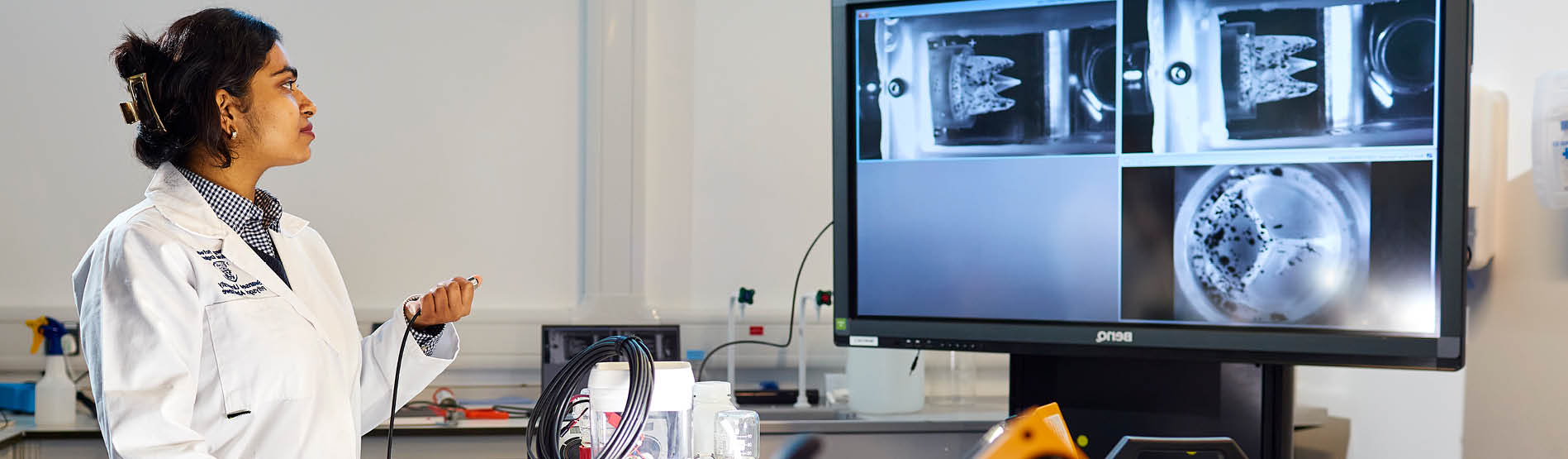
Throughout your studies you will benefit from our state-of-the-art facilities, including electrical engineering instruments to build and test medical devices, and biomechanical modelling units to optimise implant technologies.

You will study alongside our thriving research community, such as the Biomedical Engineering Simulation & Testing (BEST) Lab, a fantastic space for interdisciplinary researchers to grow ideas from concept through to manufacture, instrumentation, and testing.

This programme is available as a 3-year BEng programme, or as a 4-year MEng, which is an advanced undergraduate degree, adding a further year to your degree. Our MEng leads to a master’s level qualification, in addition to your undergraduate degree, giving you expert scientific training and a springboard towards a range of specialist careers.

As part of your studies you will have the opportunity to undertake a Year Abroad, spent in locations such as the USA, Canada, China, Hong Kong, or Singapore, enhancing your learning and offering invaluable life experience.

You are also offered the opportunity to spend a Year in Industry, in the UK or overseas, enabling you to gain valuable workplace experience. The University advocates for paid-only placements, which on average have a salary of over £20,000. Unpaid placements are considered on a case-by-case basis.

The optional Foundation Year for this programme can give you an exciting introduction to higher education, setting you up with the skills, confidence, and knowledge that you’ll need to be successful in your undergraduate degree. It’s ideal if you need a little more support after further education, or are returning to education after a gap. Following successful completion of the Foundation Year, you will progress onto Year 1 of your BEng.

Biomedical Engineering Employment Opportunities

On completion of the course, your engineering expertise, knowledge of anatomy and physiology, and experience in clinical communication will give you the confidence to enter the workforce, with our graduates highly sought after in medical device development, healthcare innovation and research organisations. Graduate roles including:

  • Biomaterials Engineer
  • Biomedical Engineer
  • Clinical Engineer/ Scientist
  • Medical Research Scientist
  • Prosthetic Design Engineer
  • Rehabilitation engineer

You may also wish to progress on to advanced study at Master’s or Doctoral level.

The skills gained throughout the programme, spanning technical design, problem-solving, and interdisciplinary collaboration, ensure that Swansea Biomedical Engineering graduates are ready to make a meaningful impact in improving patient care and advancing medical technology worldwide.

Modules

We're currently reviewing our curriculum to enhance your learning experience and embed skills that will benefit your future career. This means that some modules may be subject to change.

Entry Requirements

We consider all applicants on their own merits and welcome applications from students with a wide range of qualifications.

Biomedical Engineering, BEng (Hons)

Biomedical Engineering, MEng (Hons)

Biomedical Engineering with a Year Abroad, MEng (Hons)

Biomedical Engineering with a Year in Industry, MEng (Hons)

Biomedical Engineering with a Foundation Year, BEng (Hons)

Biomedical Engineering with a Year Abroad, BEng (Hons)

Biomedical Engineering with a Year in Industry, BEng (Hons)