Healthcare Science (Rehabilitation Engineering), BSc (Hons)

Discover Swansea at our next Open Day

Book your place today
Rehabilitation Engineering

Course Overview

Are you interested in a career where engineering meets healthcare to make a real difference to patient independence and quality of life? 

Rehabilitation engineering plays a vital role in developing technologies that help individuals overcome physical challenges, and this degree will equip you with the skills to contribute to this life‑changing work. 

Our BSc (Hons) in Rehabilitation Engineering will give you the expert training you need to begin a rewarding and highly skilled career in the healthcare profession as a rehabilitation engineer. You will learn about the application of engineering principles to develop technological solutions and devices to assist individuals with disabilities and long-term conditions. You will combine in-depth academic work with practical, clinical and technological skills in a range of specialised healthcare settings. 

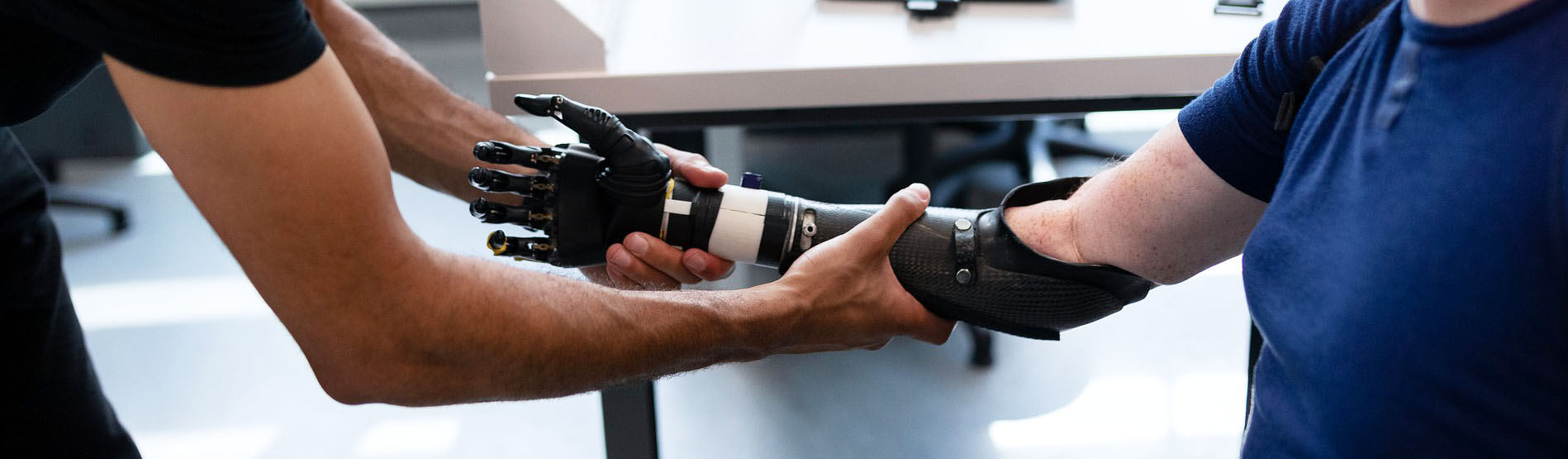
Over the three years you will learn about the design, construction and testing of a range of assistive technologies, including wheelchairs, artificial limbs, robotic aids and specialist seating. Using pressure mapping systems, goniometers, inclinometers, joystick controllers and programmers you will learn to build standard and custom-made devices, as well as learning about their importance towards revolutionising patient care and independence. 

Rehabilitation engineering is an exciting, challenging and continually evolving field requiring a high level of responsibility and technical skill. As a rehabilitation engineer, you will work as part of a rehabilitation team including prosthetics and orthotists, physiotherapists, occupational therapists, as well as patients and clinics in acute and community services. As your career progresses, you will have excellent opportunities for advanced practice and further study to Masters and doctoral level. 

Why Rehabilitation Engineering at Swansea?

Studying Rehabilitation Engineering at Swansea means learning in an environment designed to support both your academic development and your professional preparation. You will benefit from access to our excellent facilities, including a realistic clinical suite where you will be able to put your knowledge into practice and gain confidence in an environment that mirrors real healthcare settings, helping towards your experience when you go on placement. 

Your learning will be based across two locations: our Singleton Park Campus, set on the edge of the beautiful Gower Peninsula, and through practice learning placements in specialist healthcare settings, where you’ll gain handson clinical experience and apply your skills with real patients and multidisciplinary teams. This blend of campusbased study and clinical training ensures you graduate ready for the workplace. 

You will be taught and supported by our experienced academic staff, many of whom are practising healthcare scientists. Their combination of scientific expertise and professional insight means you’ll learn from people who understand the realities of rehabilitation engineering and the evolving needs of patients and services. 

Your Rehabilitation Engineering experience

During your studies, you will experience a rich blend of academic, clinical, and handson learning designed to develop your confidence and professional readiness as a rehabilitation engineer. The programme combines taught theory with extensive practicebased learning, allowing you to apply engineering principles directly to real healthcare challenges. 

Placement learning is an essential part of your experience, and you will undertake clinical placements across Health Boards in Wales. These placements give you the opportunity to work alongside multidisciplinary teams and contribute to the assessment, design and provision of assistive technologies for patients in both acute and community settings. 

Throughout the degree, you will explore how engineering can support individuals with disabilities and longterm conditions. You will gain experience with a wide range of assistive technologies, including wheelchairs, seating systems, electronic assistive technology, prosthetics and orthotics, and telehealth solutions, while developing the skills to design, build and evaluate both standard and custommade devices. 

As a rehabilitation engineer, no two days are the same. Your training will prepare you for tasks such as assessing function and movement, analysing clinical data, writing clinical reports, and prescription of equipment that supports independence and enhances quality of life. You will also be introduced to research, service development and innovation, helping you understand the broader impact of rehabilitation engineering and design within modern healthcare. 

Rehabilitation Engineering Careers

Graduates of Rehabilitation Engineering are highly sought‑after across health services, medical technology, and assistive‑technology industries. This degree equips you with the technical, clinical and problem‑solving skills needed to work in a wide range of specialist healthcare services, including: 

  • Electronic assistive technology 
  • Clinical movement analysis 
  • Wheelchair and seating 
  • Prosthetics and orthotics 
  • Telehealth and telecare 

Many graduates go on to work within NHS Wales, which operates three dedicated Rehabilitation Engineering Units employing teams of rehabilitation engineers and clinical scientists. Others progress into roles within medical device development, bespoke technology design, research, and wider healthcare innovation. Your placements and learning experiences will give you direct insight into these services, helping you develop the professional skills, clinical understanding and practical expertise needed to begin your career in these rewarding fields. 

This degree also provides an excellent foundation for advanced practice and further study, including Clinical Scientist training, MSc programmes, research degrees within rehabilitation engineering services. 

Modules

We're currently reviewing our curriculum to enhance your learning experience and embed skills that will benefit your future career. This means that some modules may be subject to change.

Entry Requirements

We consider all applicants on their own merits and welcome applications from students with a wide range of qualifications.

Healthcare Science (Rehabilitation Engineering), BSc (Hons)