Osteopathy, MOst

Discover Swansea at our next Open Day

Book your place today
Osteo

Course Overview

This advanced four-year initial degree in Osteopathy will give you the knowledge, skills, and experience you need to become a registered osteopath, qualified to diagnose and treat a wide range of health issues through manual therapy, tailored exercises, rehabilitation, and advice.  

You will gain a thorough understanding of anatomy, physiology, pathology and the psychology of pain, together with excellent clinical examination techniques, combining in-depth academic work with extensive practical clinical skills. 

Why Osteopathy at Swansea University?

This programme is approved by the General Osteopathic Council, enabling you to register to apply for practice upon graduation. 

We have an excellent reputation, being ranked 1st in the UK for Health Professions (Guardian University Guide, 2026). 

The state-of-the-art facilities in the School of Health and Social Care include a multi-disciplinary osteopathic clinic at the award-winning Health and Wellbeing Academy staffed by associate staff members who are qualified, practising osteopaths. This gives you a safe, supervised environment to build your skills and confidence as you put your theoretical knowledge into practice. 

You will also study modules on business development if you are planning to set up your own practice. 

Your Osteopathy experience

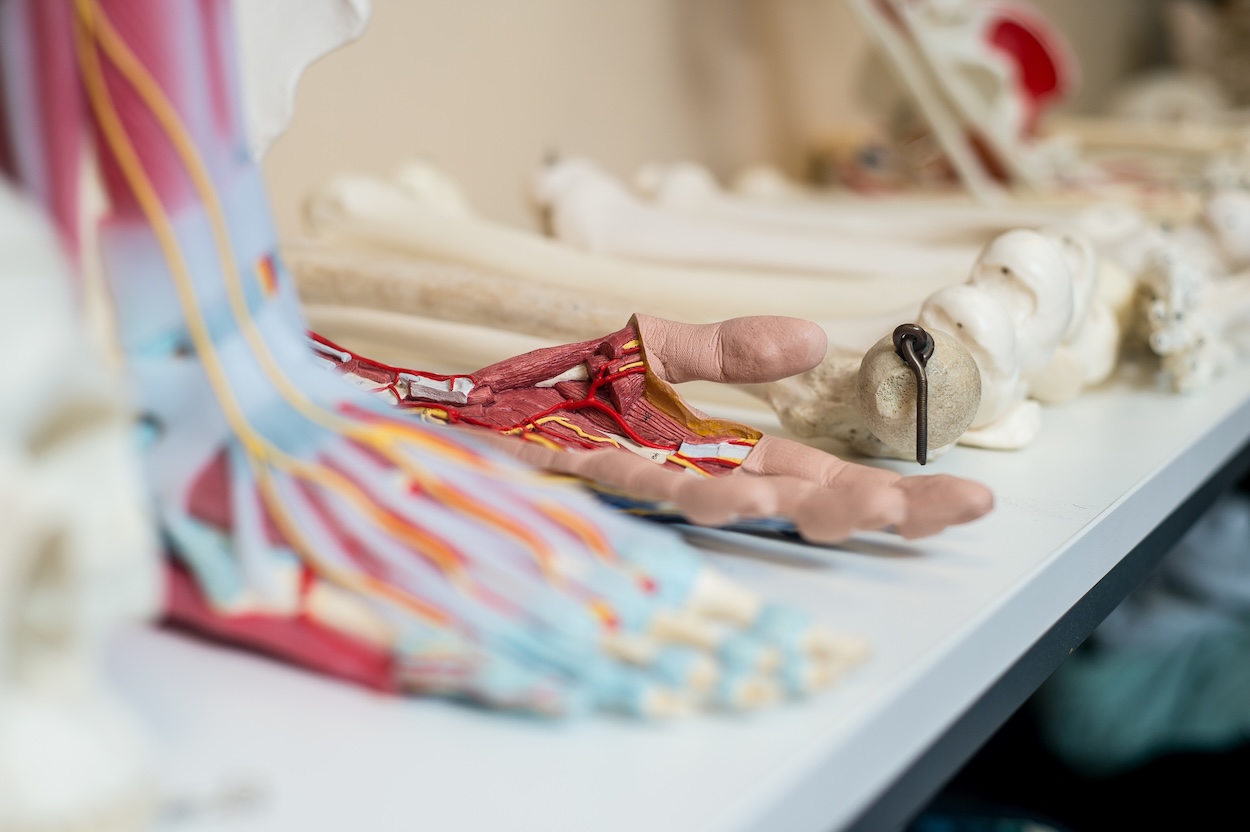
You will learn in dedicated teaching spaces across our Singleton Campus. Much of your practical and skills-based learning takes place in the Glyndwr and Grove buildings, home to a purpose-built practice suite equipped with treatment plinths, anatomical models and clinical examination equipment. You will also spend time in the Medical School’s anatomical lab to deepen your understanding of structure and function. 

Your clinical placement is based at the Health and Wellbeing Academy (HWA), our fully accessible onsite clinic in Singleton Park. This is where you will work with real patients in a supportive, supervised setting. In your first year, you will begin with clinic observation before gradually taking on more responsibility. Across the four-year programme, you will complete at least 1,000 hours of clinical practice, supported by timetabled clinic sessions. You will be allocated to a clinic group before each academic year begins. 

Practical osteopathic skills are taught in a large, well-equipped practice space with access to IT equipment and whiteboards, supporting both taught sessions and independent learning. A dedicated breakout room nearby gives you space to practise techniques, review feedback and study with your peers. 

Teaching is delivered by lecturers from across the University in areas such as medical ethics and law, health psychology, business law and marketing. Guest speakers also contribute specialist insight, broadening your understanding of professional practice and developing your transferable skills. 

At the HWA, clinic tutors manage the osteopathy clinic and provide close supervision and mentoring throughout your placement. They oversee all patient care and ensure your practice meets the Osteopathic Practice Standards, helping you grow into a confident, capable practitioner. 

Osteopathy Careers

When you graduate from the Master of Osteopathy (M.Ost), you will step into the profession with a strong set of transferable skills that prepare you for a wide range of career paths. Throughout your training, you will develop the confidence to work alongside other health professionals, gaining experience in interprofessional and multiagency environments that reflect modern clinical practice. 

You will build excellent communication and interpersonal skills, helping you work effectively with patients, families, carers and colleagues. Reflective practice forms an important part of your learning, supporting your growth as a safe and adaptable practitioner who is committed to ongoing professional development. 

These skills open the door to a variety of career routes. Many of our graduates go on to become self-employed osteopaths, working as associates in established clinics or setting up their own practices. Others choose to work in multidisciplinary healthcare settings, where osteopaths contribute to wider wellbeing and rehabilitation services. A smaller number of graduates pursue careers in areas such as research, education, the NHS, or roles that support service development and innovation. 

If you have an entrepreneurial mindset, the M.Ost gives you a strong foundation to create and grow new health and wellbeing services. With its focus on critical thinking, adaptability and patient-centred care, the programme equips you to meet the evolving demands of healthcare and to shape a rewarding and impactful career. 


Modules

We're currently reviewing our curriculum to enhance your learning experience and embed skills that will benefit your future career. This means that some modules may be subject to change.

Entry Requirements

We consider all applicants on their own merits and welcome applications from students with a wide range of qualifications.

Osteopathy, MOst