Course Overview
Molecular biology is a growing subject which is making an enormous impact in many scientific areas, including the study and treatment of many human diseases, pharmaceutical development, and the complex relationships between our environment and ourselves.
This interdisciplinary joint honours degree combines two complementary and overlapping disciplines, providing you with in-depth knowledge of the advanced molecular biology techniques and research, which are the basis for understanding all forms of life.
You will learn about the genetic processes that occur within living organisms, and study how cells work at the sub-cellular and molecular levels, gaining an in-depth understanding of the biochemical function of living organisms, from bacteria to plants, animals, and humans.
You will also develop excellent project management skills, learning how to design experiments and plan work programmes.
Why Biochemistry and Genetics at Swansea?
You will study at one of the UK’s leading Medical School, located on our Singleton Park Campus, in beautiful parkland, overlooking Swansea Bay on the edge of the Gower Peninsula.
Swansea was one of the first UK universities to introduce Genetics as a BSc discipline in the 1960s, so we have a long and respected track record in this field.
Academic staff on the programme are active in a diverse range of genetics research fields, offering you an unrivalled mix of academic excellence and cutting-edge practice. Regular research talks with Swansea University staff and guest expert speakers from other universities, industry, the NHS and research institutions are held, providing you with additional knowledge and essential insights into the sector.
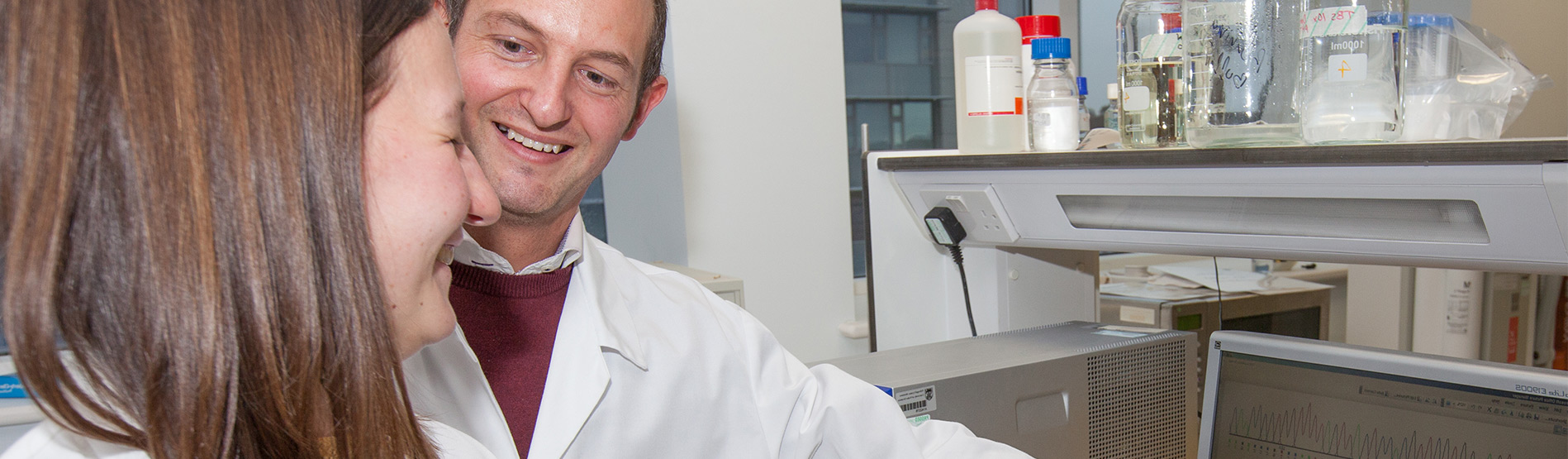
During your time here, you will benefit from having access to state-of-the-art facilities, including bioanalytical equipment such as high-performance liquid chromatography, gas chromatography, mass spectrometry, DNA and protein analytical equipment, and computer-based image analysis for molecular or cellular studies.
Our biochemistry and genetics programme aims to:
- Equip you with the knowledge, understanding and skills that you’ll need to enter a range of careers, or to undertake research or further study within biochemistry, genetics, science, medicine and other biotechnological industries
- Enable you to present, understand, evaluate and interpret qualitative and quantitative data, develop arguments and make judgements, based on the fundamental molecular concepts that are relevant to the application of genetics in medicine
- Transform you into a graduate who has the qualities needed for employment, including specialist knowledge, personal responsibility, the ability to make decisions in complex and unpredictable contexts, and the ability to exercise your initiative
- Nurture and develop the reflective skills and practices necessary to support lifelong learning
Your Biochemistry and Genetics Experience
This programme provides you with the opportunity to study core modules within the field of biomolecular sciences, alongside bespoke specialist modules related to advances in the field of biochemistry.
Topics include physiology, immunology, chemistry, biochemistry, neuroscience, pharmacology, toxicology, pharmacogenomics and genetics, alongside subject specialisms that include biochemistry, immunopathology, bioinformatics, regenerative medicine, and the genetics of cancer.
An integrated approach is taken to teaching and assessment, embedding practical and transferable skills into the investigation of core principles, as well as emerging scientific questions. Teaching draws on the outstanding existing research expertise within the Medical School, ensuring that you can learn about the most cutting-edge and up-to-date advancements in the field.
Following a grounding in fundamental science and core practical skills in the first year, your second year will tackle more complex subjects such as biostatistics, immunology, clinical aspects of the discipline, and biomolecular approaches and techniques that are utilised in moder research areas.
Your third year will expose you to more specialised fields based upon the active research interests within the Medical School, and are led by active research staff. This year also aims to further develop your independent research skills, relevant to your chosen career aims, through the completion of your own dissertation project, which will draw on the knowledge and skills you have gained throughout the course.
This programme includes opportunities to undertake a Year Abroad, enhancing your learning and offering invaluable life experience.
This course also offers you the opportunity to spend a Year in Industry, in the UK or overseas, enabling you to gain valuable workplace experience. The University advocates for paid-only placements, which on average have a salary of over £20,000. Unpaid placements are considered on a case-by-case basis.
The 4-year MSci is an advanced undergraduate degree including an integrated master’s year, with the extra year spent undertaking a research project, allowing you to further develop your skills and knowledge.
The optional Foundation Year for this programme can give you an exciting introduction to higher education, setting you up with the skills, confidence, and knowledge that you’ll need to be successful in your undergraduate degree. It’s ideal if you need a little more support after further education, or are returning to education after a gap. Following successful completion of the Foundation Year, you will progress onto Year 1 of your BSc or MSci.
Biochemistry and Genetics Employment Opportunities
The over-arching aim of this programme is to prepare scientists with the necessary core knowledge, practical and employability skills needed to succeed in the changing global environments for medical and life sciences.
Employability skills are embedded throughout the course. It is essential for all scientists to be able to analyse and present data – as such, all final year projects involve an element of data analysis, to ensure you can develop relevant skills in this area.
You will also have access to a range of unique opportunities, including networking with established academics, researchers, practitioners and professionals as part of your modules, final year projects, work placements and/or internships.
A degree in Biochemistry and Genetics opens up a range of exciting career opportunities in diverse sectors including:
- Industrial Biotechnology
- Pharmaceuticals
- Diagnostics
- Evolution
- Bioinformatics
As a graduate, you can go on to a range of potential roles, including those in:
- The Medical and Life Sciences Commercial Sector (research, sales and marketing for pharmaceutical companies, lab technician)
- Medical and Life Science Research (PhD student, technician in academia, non-profit research sector)
- Medical and Life Science Regulation (Medicines and Health Care Products Regulatory Agency, Food Standards Agency)
- Qualification as a Health Professional (after further study, such as Graduate Entry Medicine, Physicians Associate, Veterinary or Dental courses)
- Qualification as a Legal Professional (after further study, such as Graduate Entry Law, especially for intellectual property and patent-related work)
- Sciences and Technology Teaching (after further study, in schools and further education institutions)